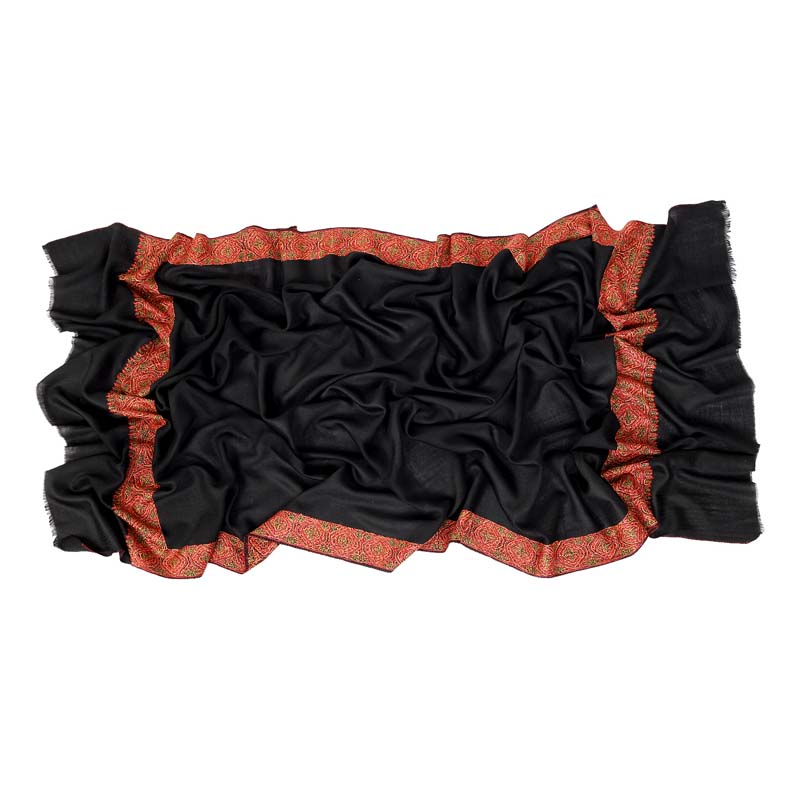
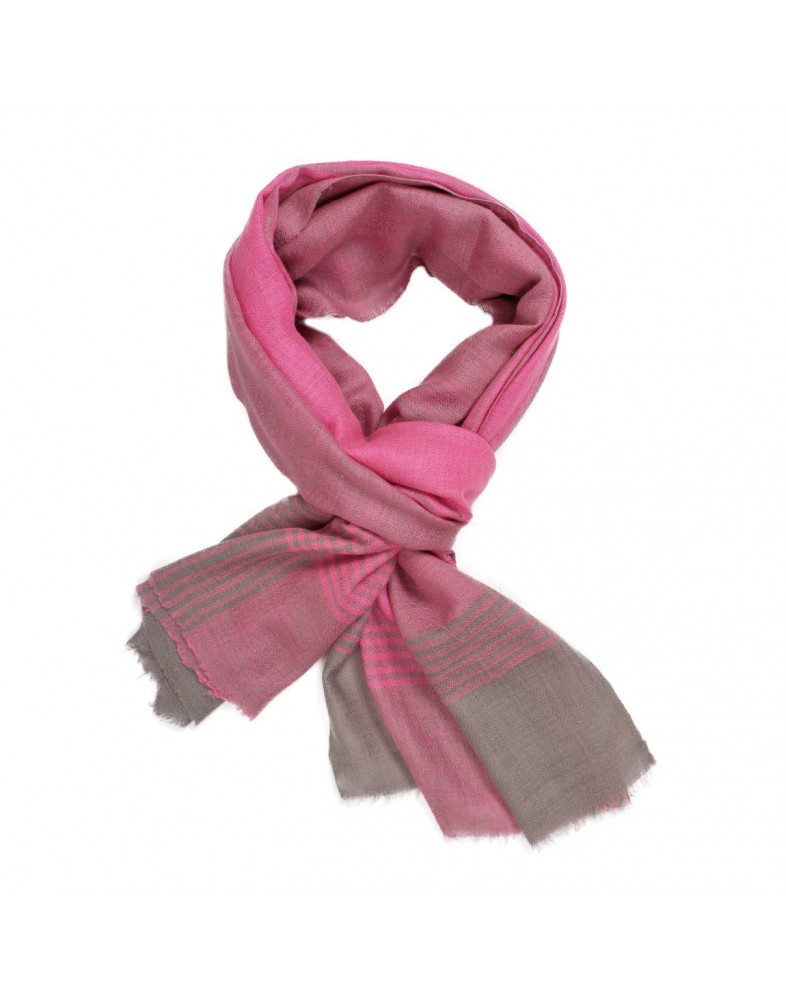
Shawls are used in order to keep warm, to complement a costume, and for symbolic reasons. The Kashmir shawl is a type of shawl distinctive for its Kashmiri weave, and traditionally made of pashmina wool, Known for its warmth, light weight and characteristic buta design.
Kashmir shawl was originally used by Mughal royalty and nobility. In the late 18th century, it arrived in Europe, where its use by Queen Victoria and Empress Joséphine popularised it as a symbol of exotic luxury and status. It became a toponym for the Kashmir region itself (as cashmere), inspiring mass-produced imitation industries in India and Europe.
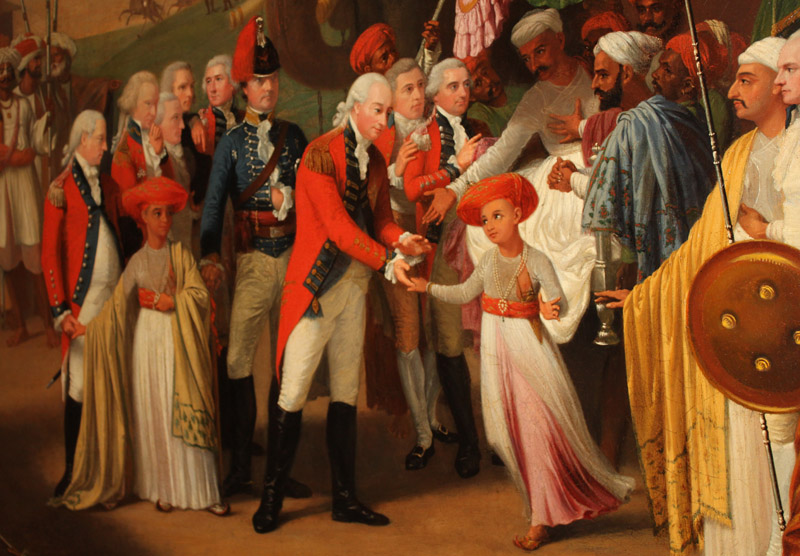
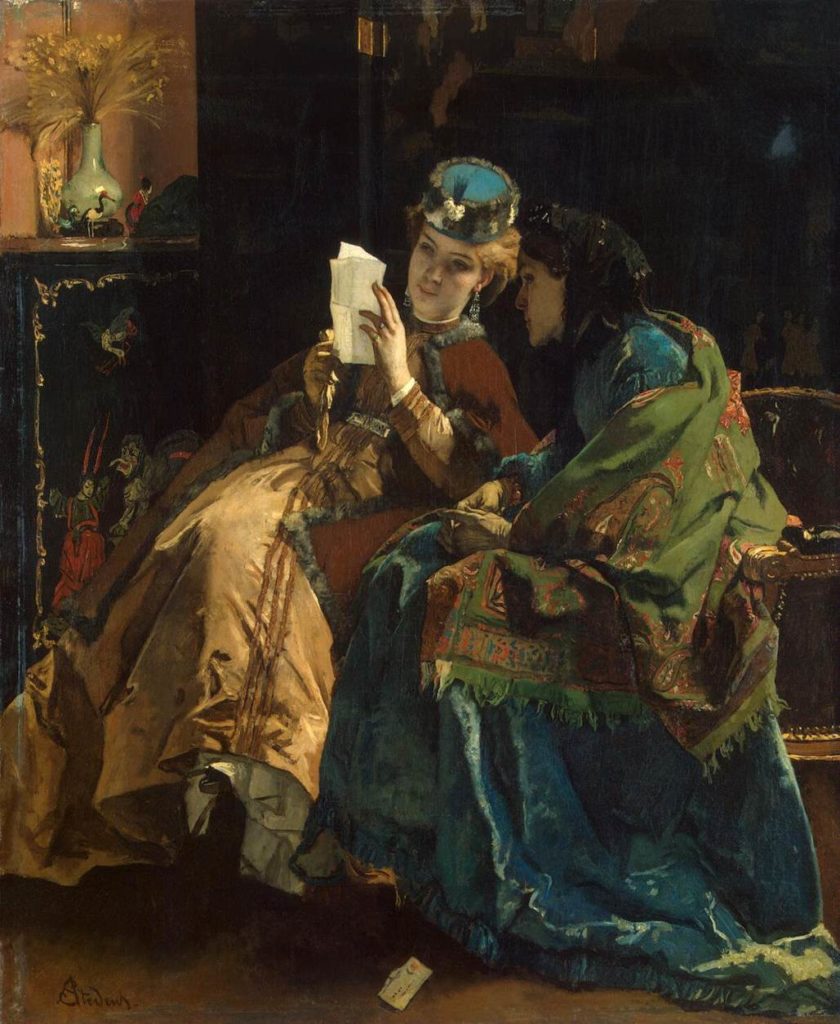
Some of the Paintings shows the Royality of Pashmina shawls.
“SURRENDER OF TIPU SULTAN”
The most interesting painting to come out of early British India. More than five Embroidered Kashmiri Shawls can be clearly seen here draped around important men. Shawls were customary to Indian Royalties and often designed to depict rank and authority.
“AFTER THE BALL”
A painitng by Alfred Stevens with a glimpse of the life of fashionable Parisian women. Meticulous attention to contemporary shawl and decor elicited analogies to seventeenth-century Dutch and Flemish art.
Shawls often found themselves in trousseau of wealthy European women. They were treasured gifts exchanged between royalties.
Remote work was very rare a decade ago. Working from home was usually
only available as a special arrangement to accommodate families in specific
cases. Remote employment was limited to the jobs of telemarketing or customer
services. Over the years with advance technology , business started growing
with remote employee. Full time jobs are now being considered for work from home (WFH). There is
pragmatic change in thinking of Managers
also that personal direct reporting is
not needed for success of business.
The current lockdown by different authorities due to Pandemic Coronavirus in the world has forced companies to think of Work from Home ( WFH ) Option.
The biggest question comes in mind “will it be a Corporate Trend now “. To find out the answer, we need to look into different Pros and Cons for Work from Home.
In countries like USA, Work from Home was already there but was applicable to roughly 20 % work force. For India , it is something new. Comparing USA and India, there is big difference in work culture and attitude for both employees and employer. Leaving IT sector BPO, all other sector are in same boat. So we have to see viability in Indian context.
Over the years, service sector has become key driver for Indian
GDP. Service sector is contributing approximately 56% of GDP and employing
roughly 32 % of work force. when we talk
about WFH, we have to keep in mind service sector.
To keep services interrupted during lockdown due to Covid-19, Companies especially in IT sector have moved majority of their work force to WFH. They are finding it beneficial as companies services are running. But other than services, there are other beneficial things also.
Cost Saving : Cities like Mumbai, Bangalore , Delhi NCR or you take any Tier-1 city, cost of office is very high. For big companies in India, cost per employee comes in between 1.5 to 2 lakhs per annum. For smaller companies, it is more. Then comes additional cost of transportation, air conditioning, furnishing and cafeteria. As per studies in Work from home, average cost per employee will come down by roughly 25% to 35%. That is a big saving in any standard.
Convenience : This is another big thing which will come in aid to the companies. Work from Home will encourage more women to join work force as hassle of daily travel will be done with. Flexible Timing In Work from Home will encourage mothers to join as she can easily juggle between Home and office work.
You can hire the best, no matter where they are. No office means, you can work with anyone in the world… Employee can work for longer hours. Wasting time on useless meetings will be over. Boss distraction is less in WFH giving strength to new thought that direct personal reporting is not needed always.
Loyalty towards company can
also increase. Employees will take less sick leaves and above all need of vacation will come down. Stress level will
come down and a better work-life balance.
Looking at flip side, where we will loose
Productivity :
Biggest loss will be productivity. While it may look easy but working from home
isn’t as easy as it appears. The absence of water cooler conversations,
impromptu meetings and cafeteria discussions with colleagues could impact
productivity. People need to meet to brainstorm.
Live video feeds help out-of-office workers see
and speak to one another in real time but We will lose the human touch.
Difficulty sticking to a routine. The order you do things at work is almost
never the order you do things at home. It can be tough to mirror your schedule
and processes once outside the office.
Many companies don’t allow smart phones during
work. How that will be controlled.
In majority of
Indian homes, it will be difficult to get a dedicated space to set up a
office. People need to see the infrastructure issue of Power back up and
Broadband lines. Making a suitable
arrangement for working at odd hours
could also be a problem. These can bring down the productivity.
Security Risk : Another major issue will be risk
involving client data. Several critical
and financial details of several government entities and global clients are
supported by Indian IT companies. WFH can put their data in compromising
position.
Lastly work
from home can be treated as commercial establishment resulting in
increase in tariffs.
Fighting the change may do more harm than good. Instead of resisting the change, organizations should improve their remote work policies and capabilities. But its too early to say . A complete evaluation for Pros and Cons is need of hour.
Being
efficient working from home can be a challenge. There are tons of distractions,
less accountability, and less communication than when you’re working in the
office. But that doesn’t mean it’s impossible. We can only say , please follow
some guidelines if you have Work from Home.
Create
a healthy work space. Good
light, comfortable temperature, ergonomic adjustable chair, Laptop, telephone
headset, etc.
Keep yourself to regular work hours.Establish
ground rules for work hour, interruptions etc
Regular breaks
are important for mental balance. Set up your alarm for regular breaks for
meals, coffee, minor chores or
simply to get up from your seat and stand for a bit.
Dress like you are at work. Even if you won’t be interacting with another
person all day, it’s important to dress for success. This includes showering
and brushing your teeth! This will tell your brain that it’s work time, not
relaxation time, and that will give you a lot more energy. Sweatpants and a
T-shirt might be more comfortable, but you may also feel sluggish, sleepy, or
unmotivated.
No roomies allowed. Being efficient working from home is all about
boundaries. This also means setting boundaries for kids, pets, and your spouse
or roommates. Try to encourage them to leave you alone while you are working so
you can stay focused.
Stay in the loop. One of the best things about working in an office is the
potential for collaboration and socialization. You don’t have to lose this just
because you are working from home. Try to check in with your coworkers at least
a couple of times per week, whether by email, phone, Skype, or even in person.
Make sure you keep up on a personal level as well as a professional level. You
can do this without taking a lot of time–just share the things that are most
important, and encourage your coworkers to do the same.
I think if you can follow these guidelines, Work from Home days will be your best days of life.
Before understanding the
influence of women in marketing, let us first go through few terminologies:
Any individual who purchases goods and services
from the market for his/her end-use is called a consumer.
In simpler words a
consumer is one who consumes goods and services available in the market.
Every customer shows
inclination towards particular products and services. Consumer interest is
nothing but willingness of consumers to purchase products and services as per
their taste, need and of course pocket.
Occupation, Age ,Economic Conditions, Life style and Personality plays an important role in affecting consumer buying behavior.
What is Marketing :
Marketing is what you
say and how you say it when you want to explain how awesome your product is and
why people should buy it.
Marketing is an ad. Marketing is a brochure. Marketing is a press release , customer service, public realtionship and many more ways. And more recently, Marketing is a Facebook page, Instagram or a Twitter account.
Marketing is also the
conversation that starts between two people who don’t know each other well.
Great conversations lead to understanding needs. Great insights like this lead
to amazing products delivered through engaging customer experiences. THIS is
marketing.
The reality, is that marketing sits at the intersection of the business and the customer – the great arbiter of the self interests of the business and the needs of the buyer.
Role of women in Marketing :
Women have a multiplier effect.They are multiple markets in one. Because women serve as primary caregivers for children and the elderly in virtually every society in the world, women buy on behalf of the people who live in their households, as well as for extended family (such as older parents and in-laws) and friends.
Women drive 70-80% of all consumer purchasing, through a combination of their buying power and influence. Influence means that even when a woman isn’t paying for something herself, she is often the influence or veto vote behind someone else’s purchase.
Marketing in earlier days were more of masculine job, all forms were dominated by men. Role of women were all about making pretty brochures and planning parties. Over the years , marketing concepts made drastic changes . From mere focus on retail sale to the influence marketing, women has started playing important roles in that.
Although this may come across as a bit sexist, there are scientifically proven reasons why women tend to do better in customer service. This is not to say that men can’t do the job as well, but statistics indicate hat women have something inherent in their genetic makeup that makes them ideal candidates to lead a customer service team .
Empathy Is the Foundation of Customer Service. Recent studies proves that customer service reps should show more emotion. They should be sympathetic to the needs and concerns of the customer and show a genuine response, an empathetic demonstration to that customer’s feelings. Whether it is in sales or in the complaints department, this study indicates that customers want you to really ‘hear’ them. They don’t want to be sold something they don’t need, and they want you to ‘fix’ what is broken. Studies Prove that Women Tend to Be More Empathetic than Men. It is proved that if you want great customer care based on an empathetic relationship with your customers, consider hiring a woman.
Most of the women in India are educated and transformed as a working force from mere housewives. It has changed her lifestyle and brought confidence in her to be front runner in direct sales also.
Marketing requires creativity and vision. Women enjoy the creativity. Women enjoy understanding people and their needs. And no matter what the marketing position — from managing consumer packaging to Web marketing , keeping people interested in a company or product by speaking to their needs and wants requires both creativity and vision.
Another reason some suggest is because working in marketing is not a solitary pursuit. Collaboration, a major component of most marketing jobs, is a priority for women. It’s natural for women, and it’s a strength.
Portray of women in the advertisement has changed .
Portraying evolving gender roles aptly has always been a tough nut to crack for ad agencies. More often than not women have been depicted in the usual stereotypical roles over the years. But as women learn to assert themselves and increase their spending power, brands are realizing that they can no longer pander to the lowest common denominator in their communication.
Thankfully, some brands dare to break stereotypes beautifully and showcase the contemporary woman in her all new avatar. Although after that women were depicted in various roles and statuses in advertising—ranging from homemaker to business executive and from sex object to superwoman—it is only since the early 21st century that women have been shown in roles other than purchaser of domestic products. Women got involved in the marketing of the products through advertisement.
L’Oreal
Take the example of L’Oreal . Company shifted its ad strategy to focus on creating an emotional connection with its consumers instead of highlighting its products. This conveys a specific image to the consumer that is congruent with the product they purchase that I AM WORTH IT. Here women is portrayed to sell the product as she is end user and with a tag line ” i am worth it “.
CVS Pharmacy
“Beauty in Real Life” campaign, which features a diverse cast of women from all over in un retouched print and video imagery. In the ads, women are seen literally using their beauty products in real life, doing things like getting ready in the morning, or putting on makeup to go out at night. The photos all feature the “CVS Beauty Mark,” which is an indication that the images haven’t been altered or edited. “The connection between the propagation of unrealistic body images and negative health effects, especially in girls and young women, has been established,“. “This is a health issue… having unrealistic expectations leads to stress in daily lives. Company want to be part of the solution and encourage others to join us.“
By
show casting woman from different culture and untouched images, company showed
a health concern for women and brought a increase in the confidence of
customers towards company. All these helped to bring more sales.
So in all we can say that role of women in marketing has changed drastically over the years.
we should not forget that
“Life is not a competition between men and women. It is a collaboration.”
Pashmina is the traditional name for the very finest grade of cashmere wool. Because of its unique softness and comforting warmth, pashmina is also known as the diamond fabric and the soft gold of high Asia. Put simply, it is the finest, softest and warmest wool available anywhere.
This amazing cashmere comes exclusively from the underbelly of the Capra Hircus goat, in the most remote regions of the Himalayas. Because they live approximately 14,000 feet above sea level, these special goats grow a thin, inner coat of hair that insulates them during the long, harsh Himalayan winters. It is this unique inner coat of hair that is used to produce pashmina. Each hair is about 1/6th the diameter of most other types of hair – but is still surprisingly durable while being stunningly soft and comforting to human skin.
You may be surprised to discover that it takes the entire annual growth of three of these goats to create just one pashmina shawl. But take comfort in the fact that these goats are not harmed during the process of producing pashmina. This is because the wool is collected only after being shed naturally. It is almost like this special cashmere wool is the goats’ gift to everyone. And what an amazing gift it is!
Pashmina is also quite unusual in that it actually becomes softer and more comfortable with each use, actually making it gentler on your skin each and every time you have the luck to wear it. With proper care, the diamond fabric will last a lifetime or more. This is evident in the fact that pashminas have been handed down from generation to generation in royal and wealthy families throughout the world.
It is interesting to note that Napoleon may have started the pashmina fashion craze over 200 years ago when he presented a pashmina shawl to his wife. She was so pleased with the shawl that she asked Napoleon to get more so she could share them with her fashionable society friends. Two hundred years later pashmina remains an essential part of a fashionable wardrobe and popular wedding and bridesmaid gifts, attesting to the durability and widespread appeal of this classic accessory.
Pashmina Care
One of the wonderful things about your pashmina accessory, cashmere baby blanket or throw is that it can last for years and years – if you take proper care of it. It will even get softer and more luxurious with each wash!
In general, dry cleaning is the preferred method of washing for pashmina and cashmere care. However, you can hand wash occassionally if you are careful and follow a few guidelines that are listed below. We do suggest washing it before first use to make sure the natural vegetable dyes do not bleed.
To wash by hand, first use very cold water. You may add a little soft detergent such as baby shampoo or Woolite if you wish but please be certain the detergent is completely dissolved first. Then wash very gently by hand while being very careful with the hand-tied tassels if you are washing a pashmina accessory.
After washing, please do not wring dry. Simply lay it flat to dry. Once dry, you may warm iron but it is best to put a piece of paper or cloth between the iron and the fabric.
That’s it. Proper pashmina and cashmere care is actually easy.